
How To Pre-Chart the Decisions That Matter in 2–3 Minutes
Use a decision-driven pre-charting system to start visits prepared, stay on schedule, and reduce the work that follows you home.
- Problem list17 items
- A1c 9.1, up from 7.8. Intensify?
- Medications23
- Labs, 2019 to present146 results
- Colonoscopy overdue. Order today?
- Outside records4 PDFs
- Last six progress notes6
- BP above goal twice. Adjust meds?
- Know what decisions are likely to matter before the visit starts—without reviewing every detail in the chart.
- Pre-chart in just 2–3 minutes by focusing on decision points instead of drowning in data.
- Walk into each visit prepared, focused, and clearer on what needs your attention.
- Spend less time over-prepping before clinic so you have a better shot at staying on schedule all day.
- Use the Ready-Set-Chart method to reduce unnecessary chart review and make pre-visit prep more repeatable.
Most Pre-Charting Is Reading Without a Question
It's 8:40 p.m. You open tomorrow's schedule to take a quick look at the first few patients. Forty minutes later you've read a cardiology consult from 2019, scrolled three years of normal CBCs, and reconciled a med list for someone coming in about a rash.
And you still couldn't say what you'll actually decide in the room.
Open-ended chart review feels like diligence. It just has no finish line.
The Pre-Charting Sprint gives it one: find the decisions the visit will hinge on, prep those, and close the chart.
How Decision-Driven Pre-Charting Helped Physicians Spend Less Time Preparing
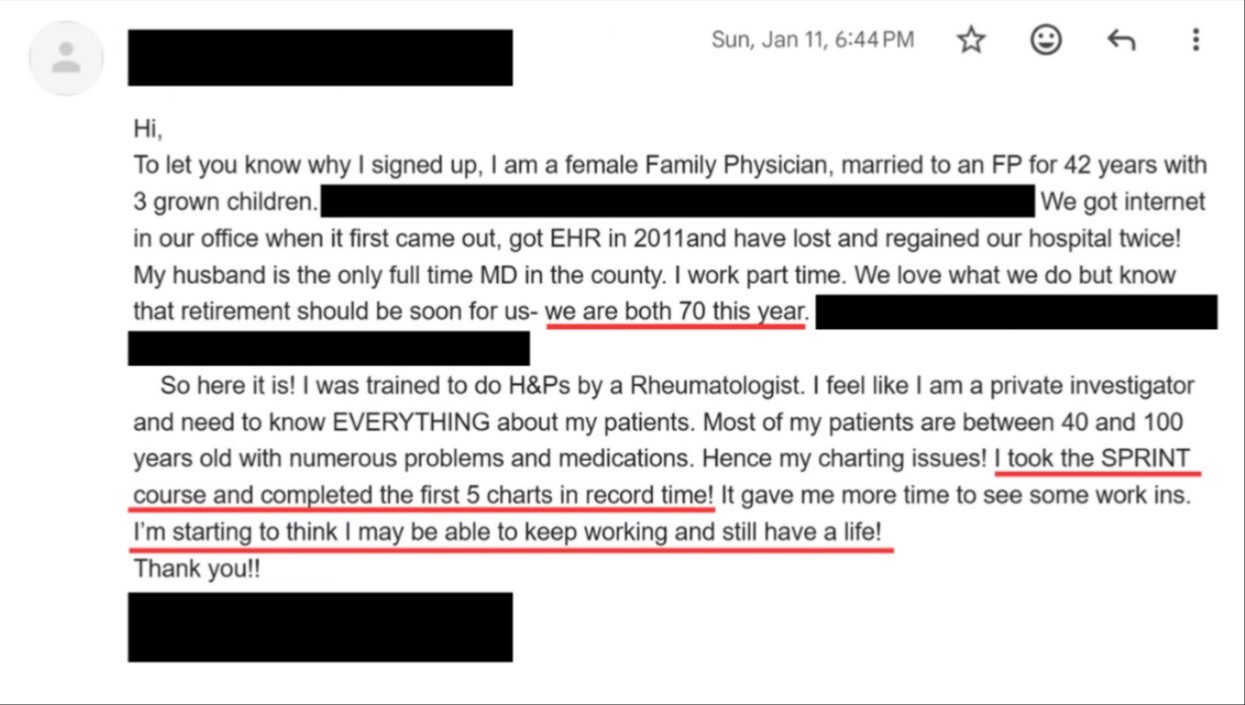
“I’m starting to think I may be able to keep working and still have a life.”
A 70-year-old family physician reported completing her first five charts “in record time” after applying the approach.
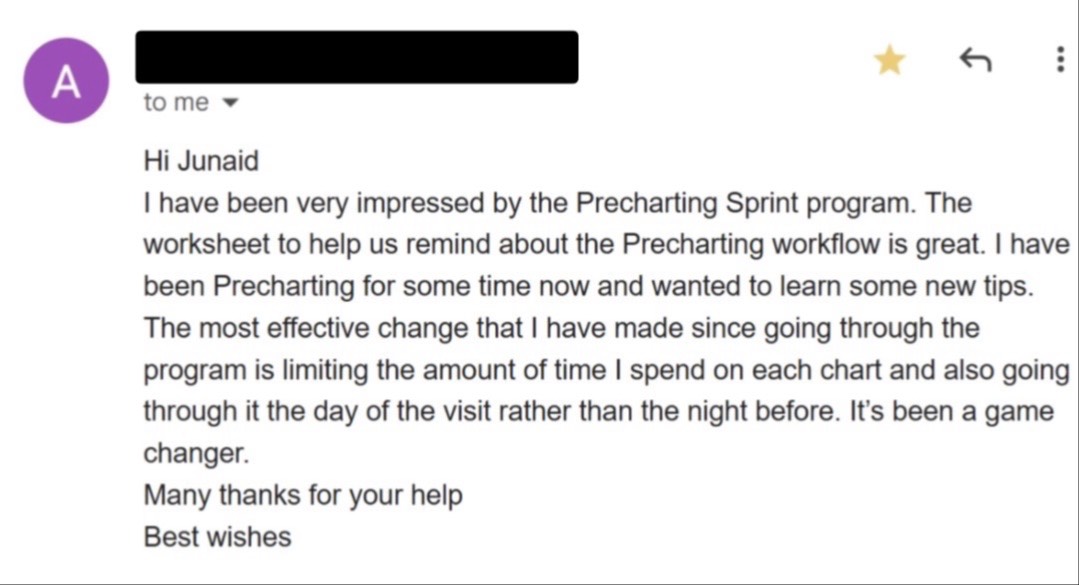
“It’s been a game changer.”
One physician said the biggest change was limiting the amount of time spent on each chart and shifting pre-charting from the night before to the day of the visit.
“A common-sense approach to clinical practice.”
Another physician praised the program’s coaching style and said they were able to listen to the program on the way to work.


The Pre-Charting Sprint
A practical audio training built to help you replace open-ended chart review with a faster, decision-driven approach to pre-charting.
You’ll get:
-
The Pre-Charting Sprint audio courseIncluded
Teaches the Ready-Set-Chart method for focusing on the decisions most likely to matter during the visit.
-
The Pre-Charting ChecklistIncluded
A simple reference for applying the method consistently.
-
One purchase$37
One simple $37 purchase gives you the method and checklist for replacing open-ended chart review with a repeatable 2–3 minute pre-charting process.
Because the Pre-Charting Sprint includes immediate access to the audio training and downloadable checklist, all sales are final.
Questions
How long does pre-charting take?
The Ready-Set-Chart method is designed to help you pre-chart in about 2–3 minutes per patient by focusing on the decisions most likely to matter.
How is this different from regular pre-charting?
Instead of reviewing everything in the chart, you focus on the clinical decisions you’re most likely to make during the visit.
What do I get?
You’ll get the Pre-Charting Sprint audio course plus the Pre-Charting Checklist.
Will this add more work before clinic?
No. The goal is to replace open-ended chart review with a faster, more focused approach.
How do I access it?
You’ll get immediate access to the digital audio training (via a platform called Hello Audio that lets you use your preferred podcast platform to listen) and downloadable checklist after purchase.
Will this work with my EHR?
Yes. The method is designed to work with any EHR because it changes how you approach pre-charting, not the software you use.
Can I get a refund?
Unfortunately, no, because you receive immediate access to the audio training and downloadable checklist, all sales are final.
Who is this for?
The Pre-Charting Sprint is designed for outpatient physicians, nurse practitioners, and physician assistants who want a faster, more focused way to prepare for visits.
Replace Open-Ended Chart Review With a 2–3 Minute Pre-Charting Process
Learn the Ready-Set-Chart method and use the included checklist to focus your prep on the clinical decisions most likely to matter.